


A significant shortage in carbon dioxide (CO2) is currently disrupting global supply chains. This scarcity primarily impacts the production of dry ice, a critical cooling agent. The reduced availability of dry ice creates widespread ripple effects, forcing industries reliant on cold-chain logistics to seek urgent alternatives.
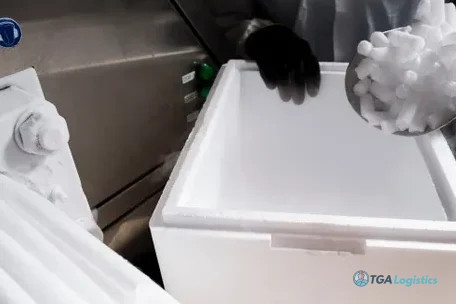
CO2 Shortage Fuels Supply Chain Challenges
The core issue stems from a dwindling supply of carbon dioxide. Manufacturers use CO2 as a fundamental component in dry ice production. Consequently, a constrained CO2 market directly translates into less dry ice available for distribution.
This shortage has far-reaching consequences. Businesses across various sectors, from pharmaceuticals to food delivery, depend on dry ice for temperature-controlled transport. They now face considerable hurdles in maintaining product integrity and delivery schedules.
Innovation in Cold-Chain Packaging
In response to this evolving challenge, cold-chain packaging companies are proactively developing new solutions. These firms recognize the urgent need for reliable alternatives. Their innovations aim to mitigate the impact of the dry ice supply issues.
A global CO2 shortage is disrupting cold-chain logistics by limiting dry ice production, impacting various industries. Packaging companies are responding by developing alternative cooling agents like PCMs and gel packs. These innovations offer enhanced safety and sustainability, transforming temperature-controlled shipping.
Developing Alternative Cooling Agents
Many companies are exploring advanced phase change materials (PCMs) and specialized gel packs. These alternatives offer consistent temperature control without relying on CO2-derived dry ice. They provide stable thermal performance for extended periods, crucial for sensitive shipments.
Enhancing Safety and Sustainability
Beyond addressing the immediate supply gap, these new solutions bring additional benefits. Packaging innovations enhance overall safety within cold-chain operations. They also promote greater sustainability, aligning with broader environmental goals.
Improved Operational Safety
Dry ice requires careful handling due to its extremely low temperature and sublimation properties. New cooling technologies often present fewer handling risks. This reduces the potential for frostbite or gas buildup, making logistics safer for personnel.
Commitment to Environmental Sustainability
Many alternative cooling solutions are reusable or made from recycled materials. This significantly lowers the environmental footprint compared to single-use dry ice. Adopting these sustainable practices helps companies meet their green initiatives and reduces waste.
The ongoing CO2 shortage acts as a catalyst for significant transformation within cold-chain logistics. Packaging innovators are not just solving a current problem; they are shaping a safer, more sustainable future for temperature-controlled shipping.