


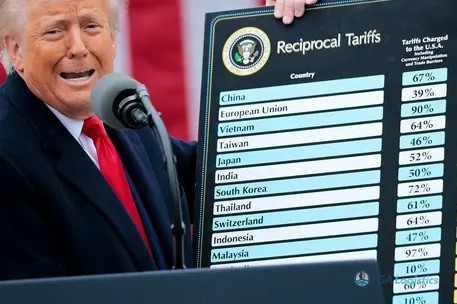
The U.S. Supreme Court has invalidated tariffs previously imposed by former President Donald Trump. This significant ruling rejected his assertion of emergency powers to implement broad global trade measures.
The Court’s Defining Decision
In a 6-3 decision, the Supreme Court firmly rejected the former president’s legal argument. Trump had claimed a 1977 law granted him expansive authority to impose tariffs worldwide. The majority opinion clarified the limits of executive power in trade policy.
The ruling specifically addressed the scope of a statute often invoked in matters of national security. The court found that the law did not provide the broad, discretionary power Trump had asserted. This decision underscores the judiciary’s role in interpreting legislative intent.
The U.S. Supreme Court invalidated tariffs imposed by former President Trump, rejecting his claim of broad emergency powers under a 1977 law. This 6-3 ruling clarifies executive authority limits in trade, reinforcing Congress's primary role and setting a precedent for future presidential trade actions.
Presidential Authority and Trade
This ruling carries significant implications for presidential authority in international trade. Historically, presidents hold certain powers to influence trade relations. However, these powers are not without legal boundaries.
The court’s decision reinforces the principle of checks and balances. It suggests that Congress, not the executive branch, retains primary authority over broad tariff impositions. This distinction is crucial for constitutional governance.
Future Implications for Trade Policy
The invalidation of these tariffs sets a precedent for future administrations. Presidents may now face stricter scrutiny when using similar statutes to enact widespread trade barriers. This could lead to more collaborative policymaking with Congress on trade matters.
Furthermore, the ruling may influence how the U.S. engages with international trade partners. It clarifies the legal framework for American trade policy. This ensures greater predictability and adherence to established legal norms.