


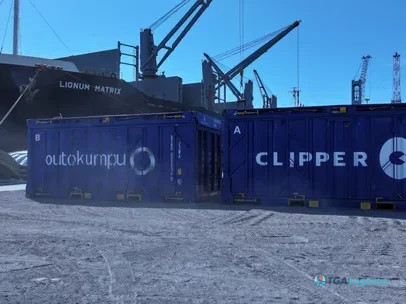
Steel producer Outokumpu has significantly enhanced its logistics operations by adopting foldable containers for transporting challenging scrap steel. This strategic shift not only streamlines complex supply chains but also drives down operational expenses, as detailed in a recent Alabama Port Authority case study.
Innovation in Industrial Logistics
Outokumpu’s implementation of collapsible containers marks a notable advancement in industrial material handling. These specialized units offer a practical solution for moving scrap steel, a material often cumbersome due to its irregular shapes and varying densities. The ability to fold these containers after unloading creates significant efficiencies in return logistics.
Steel producer Outokumpu has significantly enhanced logistics by adopting foldable containers for scrap steel. This strategic shift streamlines complex supply chains, drastically cutting operational expenses, fuel consumption, and freight charges. Validated by the Alabama Port Authority, this innovation optimizes space and boosts efficiency, offering substantial cost savings for the company.
Addressing Transport Challenges
Traditional methods for transporting scrap steel frequently involve empty container returns, occupying valuable space and incurring unnecessary costs. Foldable containers mitigate these issues by collapsing to a fraction of their loaded size. This design minimizes the footprint of empty containers during their return journey, optimizing space utilization across the transportation network.
Cost Reduction and Efficiency Gains
The economic benefits of this new system are substantial for Outokumpu. By reducing the volume of empty containers, the company drastically cuts down on fuel consumption and associated freight charges for return trips. This optimization extends beyond mere cost savings, enhancing the overall efficiency and responsiveness of their supply chain operations.
Validation from Alabama Port Authority
The Alabama Port Authority recently published a case study validating the success of Outokumpu’s initiative. Their analysis underscores how collapsible container technology directly contributes to more sustainable and cost-effective shipping practices within the steel industry. This endorsement highlights the potential for broader adoption of such innovative logistics solutions across various sectors.
Outokumpu’s strategic adoption of foldable containers exemplifies a forward-thinking approach to industrial logistics. This method demonstrates a clear path toward simplifying material transport, reducing environmental impact, and achieving significant operational savings. The success story offers a valuable blueprint for other industries facing similar logistical complexities.