


Major logistics providers FedEx, Maersk, and GXO have largely dismissed any significant competitive threat from Amazon’s recently launched Supply Chain Services. These established companies maintain that their core capabilities and strategic focus areas differ considerably from the services Amazon now offers to all businesses.
Industry Veterans Weigh In
The sentiment across these leading firms reflects a confidence in their specialized operations. Executives from FedEx, Maersk, and GXO have publicly articulated their positions, emphasizing distinctions in their service models. They do not view Amazon’s entry into broader third-party logistics as a direct challenge to their established market segments.
FedEx’s Stance
FedEx, a global leader in express transportation and logistics, highlights its extensive network and diverse service portfolio. The company consistently focuses on complex, time-sensitive, and global shipping needs. Its long-standing infrastructure and deep expertise in international customs and regulatory compliance position it uniquely in the market.
Maersk and GXO’s Perspectives
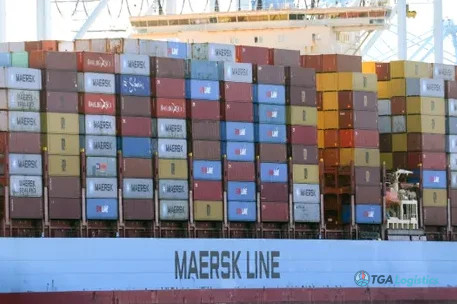
Similarly, Maersk, a dominant force in ocean shipping and integrated logistics, points to its end-to-end supply chain solutions. Maersk handles vast volumes of international containerized freight, offering comprehensive services from port to door. GXO, a pure-play contract logistics provider, emphasizes its advanced warehouse automation and specialized solutions for various industries. GXO often manages highly customized and complex warehousing operations for its clients.
Divergent Business Models
The core argument from these logistics giants centers on fundamental differences in their business models. Amazon’s Supply Chain Services primarily leverage its existing fulfillment network and technology developed for its own e-commerce operations. While innovative, this approach may not directly compete with the specialized, large-scale, or highly customized services offered by FedEx, Maersk, and GXO.
These traditional logistics providers often cater to a broader spectrum of industries with unique requirements. Their services encompass everything from heavy freight and cold chain logistics to complex global distribution networks. This differentiation, they argue, shields them from direct competition with Amazon’s current offerings.