


Title: Modular Solutions Redefine Infrastructure Expansion Speed
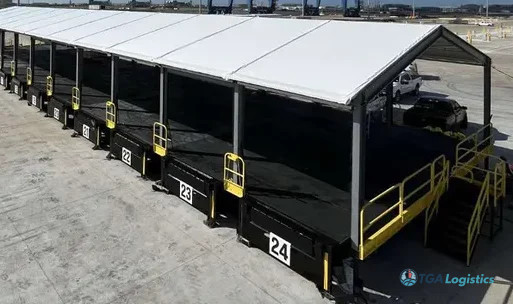
Businesses today face persistent pressure to expand operational capacity rapidly. Traditional concrete construction often struggles to keep pace with these evolving demands. However, modular platforms and buildings are emerging as a highly effective alternative, significantly accelerating the expansion of loading capacity. These innovative solutions achieve results up to ten times faster than conventional building methods.
Addressing the Capacity Challenge
Logistics and industrial sectors constantly require more space and efficient workflows. Companies need quick solutions to handle increased inventory, shipping volumes, and production requirements. The conventional approach to building often creates significant bottlenecks, hindering a business’s ability to adapt quickly to market changes.
Traditional construction methods involve extensive site preparation, long material lead times, and prolonged on-site labor. These factors contribute to extended project timelines and considerable operational disruption. Businesses frequently find themselves waiting months, or even years, for essential infrastructure upgrades.
The Modular Advantage
Modular construction presents a distinct advantage in this environment. These systems consist of pre-engineered components, such as platforms and building sections, manufactured off-site. Workers then transport and assemble these ready-made units at the final location, minimizing on-site construction work.
This streamlined process bypasses many time-consuming steps inherent in traditional building. It reduces the need for extensive foundation work and eliminates the lengthy curing periods associated with concrete. Consequently, projects move from concept to completion much faster.
Modular platforms and buildings offer businesses a highly effective solution for rapid infrastructure expansion, up to ten times faster than traditional construction. This innovative approach efficiently addresses urgent capacity needs, minimizing disruption and enabling quick adaptation to market demands for enhanced productivity.
Unprecedented Speed and Efficiency
A primary benefit of modular solutions lies in their rapid deployment. Companies can add critical loading capacity up to ten times faster than through conventional construction. This speed minimizes operational downtime and allows businesses to meet immediate demands efficiently, ensuring continuity and productivity.
Beyond sheer speed, modular systems often boast other efficiencies. Their controlled manufacturing environments typically result in less material waste. The standardized nature of modular components also contributes to predictable project timelines and costs, offering greater certainty for planners and investors.
Leading the Shift
Specialized providers exemplify this shift towards modularity. Companies like Dockzilla offer purpose-built modular platforms and buildings designed for industrial applications. Their solutions directly address the urgent need for quick, scalable infrastructure, allowing businesses to adapt dynamically to fluctuating market conditions.
This innovative approach is reshaping how industries think about expansion. It provides a flexible and responsive framework for growth, moving beyond the limitations of fixed, permanent structures. The ability to quickly deploy and reconfigure assets offers a strategic advantage in a fast-paced economy.
The widespread adoption of modular platforms and buildings signals a significant evolution in construction practices. This innovative methodology offers a compelling answer to the urgent need for rapid, efficient capacity expansion across various industries, promising a more agile future for infrastructure development.